The Shoe Salesman Who Rewired Football: Arrigo Sacchi's Revolution
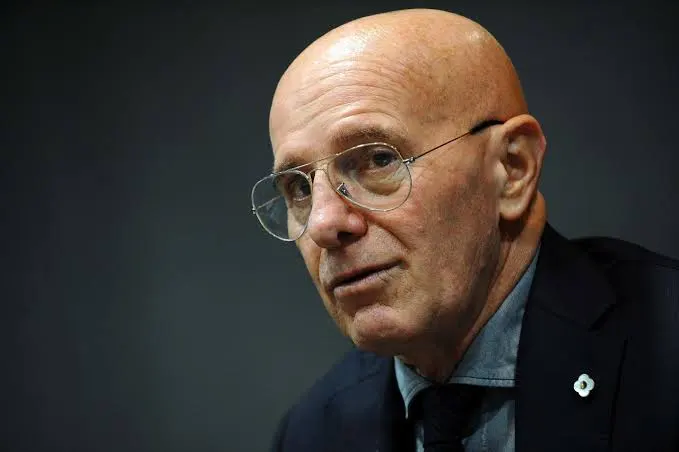
'I never realized that in order to become a jockey, you have to have been a horse first.' Arrigo Sacchi fired that line back at every critic who questioned why a man who never played professional football should be allowed to coach it. It's the perfect summary of who he was. Stubborn, a little combative, and completely convinced that football was a system of ideas, not a collection of individual talents. He turned out to be right, and the game has never fully recovered from how right he was.
From Shoe Factory to San Siro
Before Sacchi took over AC Milan in 1987, he'd never kicked a ball professionally. He worked in his family's shoe business and coached in the lower divisions of Italian football, building a reputation at Parma that eventually caught the eye of Milan owner Silvio Berlusconi. It was a strange appointment for a club that had spent much of the 1980s in turmoil, including two relegations. Italian football at the time was still built around catenaccio, deep defending, a sweeper (the libero), and rigid man-marking, where each defender was assigned an opposing forward and followed him around the pitch like a shadow.Sacchi thought that whole approach was backwards.
Killing the Libero
Sacchi's central idea was simple to say and brutally hard to execute. The team should control space, not track men. Instead of man-marking, his Milan played a strict **zonal defense**, a flat back four that moved as a single unit, compressing the pitch so there was never room for an opponent to operate in. There was no sweeper. Every defender had to think collectively rather than individually, which was almost heretical in a country that had built decades of success on the libero system.
To drill this into his players, Sacchi used what became one of the most famous training methods in football history. It was called shadow play. He'd have his team train without a ball at all, moving as a unit according to where an imaginary ball was on the pitch. He'd tell the players where it was, and they'd shift into position accordingly, sharpening the zonal marking that shut down opponents' passing options. It sounds almost absurd, grown professionals chasing a ball that isn't there, but it built the spatial instincts that made his Milan side so suffocating to play against.
Pressing as a Weapon
The other pillar of Sacchi's football was pressing. Not the occasional press teams used opportunistically, but a coordinated, high-intensity system used constantly to win the ball back near the opponent's goal. The synchronization was precise enough that pressing didn't demand enormous physical effort from any one player, because the players behind the pressure line could organize and react immediately if the first line was beaten. Carlo Ancelotti, who Sacchi later called someone who 'played football in his head,' was one of the key initiators of that press in midfield.
The team stayed compact. Sacchi's famous phrase was about keeping 'the short team,' squeezing the distance between his defense and his attack so there was never space in behind or in the midfield gaps. Full-backs pushed forward to add width and depth in attack. Wingers were expected to work as hard defensively as they did going forward. Every player had a job in every phase of the game.
The Team That Proved It
Sacchi had the players to make it work. Franco Baresi and Paolo Maldini at the back, Ancelotti pulling strings in midfield, and the Dutch trio of Ruud Gullit, Marco van Basten, and Frank Rijkaard providing the quality up front. This Milan side won back-to-back European Cups in 1989 and 1990, along with a Serie A title. It wasn't just that they won, it was how they won, playing a brand of football rarely seen before in Italy.
The high point came on April 19, 1989, in the semi-final against Real Madrid. Sacchi's side won 5-0 at the San Siro, a result still regarded as one of the most complete tactical dismantlings in the history of the competition. Nobody has successfully defended the European Cup since.
Beyond Milan
Sacchi later took charge of the Italian national team, leading them to the 1994 World Cup final, and afterward spent years working within Italian football's youth development system, trying to instill the same pressing and zonal principles from the grassroots up.
But his real legacy isn't in trophies. It's in how football is now coached everywhere. Pep Guardiola and Jürgen Klopp, two of the most influential managers of the modern era, have both cited Sacchi's Milan as foundational to how they think about the game. High defensive lines, coordinated pressing triggers, zonal structures, compact blocks. All of it traces back to a man who spent his pre-coaching career selling shoes and got laughed at for it.
Sacchi didn't just beat teams. He changed the terms of the argument about what football was supposed to look like. Almost forty years later, most of the sport is still playing by the rules he wrote.